Bocce Court Design & Installation in New York
Custom residential and commercial bocce courts built for playability and longevity. From sub-base and drainage to surfacing, edging, and lighting—BocceBrew handles design, build, and maintenance across NYC, Long Island, and Westchester.
- Clay, Har-Tru, & premium synthetic turf systems
- Laser-leveled bases • Drainage engineered for NY weather
- NYC • Long Island • Westchester • Hudson Valley
What Is Bocce? Rules, Court, and How to Play
Bocce (pronounced BAH-chee) is one of the world’s oldest lawn and court games—fast to learn, social, and endlessly replayable. It’s perfect for city rooftops, backyard gatherings on Long Island, or community parks across New York. This guide explains the game, court dimensions and materials, scoring, basic rules, and winning strategy. If you’re planning a home or commercial court, Bocce Brew specializes in bocce court installation in New York—from design to drainage, surfacing, and maintenance.
Bocce in a Nutshell
Bocce is played by two teams (1–4 players per side). Each team rolls larger balls (bocce) toward a smaller target ball (the pallino, also called the jack). After all balls are thrown, the team with the closest ball(s) to the pallino scores. Games usually play to 12 or 15 points, with points awarded at the end of each “frame.”
Court Dimensions & Surfaces
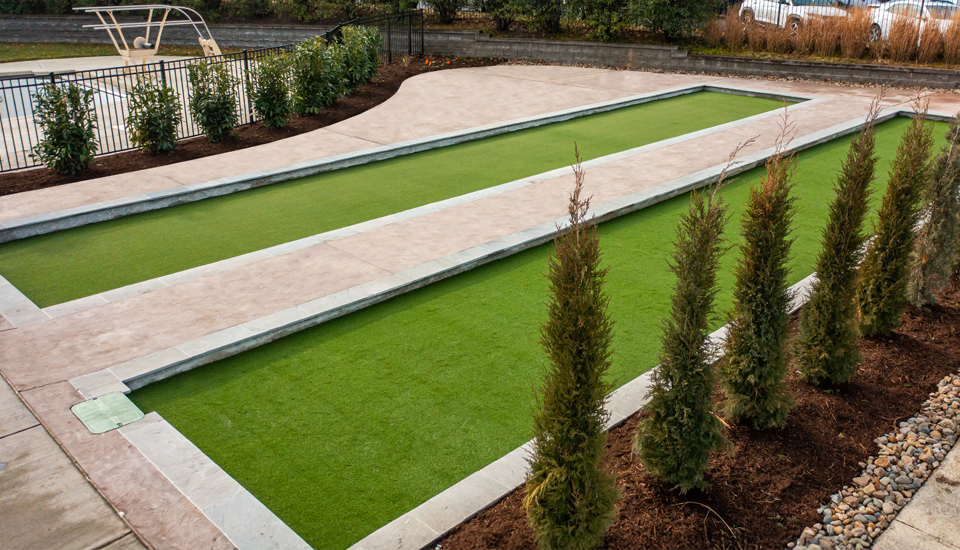
Regulation courts are commonly 8–13 feet wide by 60–91 feet long, enclosed by wooden or composite sideboards that allow for bank shots. Many New York residential courts choose a compact footprint such as 10×60 feet to fit tight lots and rooftops. Good courts are about consistency—true roll, predictable pace, and durable drainage.
- Sub-base: Compacted aggregate with engineered drainage to prevent puddles and heaving.
- Base layer: Laser-leveled stone dust or similar for a perfectly flat plane.
- Surfacing: Oyster shell/Har-Tru blends for classic play; or premium synthetic turf infill for low maintenance.
- Boards/Edging: Timber or composite boards 6–12 inches high; clean rebounds are part of strategy.
- Lighting (optional): Low-glare LEDs extend play into the evening—popular in NYC courtyards and clubs.
Not sure which system is right for you? Bocce Brew can recommend the best installation for rooftops, backyards, hospitality venues, or corporate spaces.
Equipment You Need
- Bocce balls: A set includes eight equal-weight balls (four per team) plus one pallino. Typical sizes are 107–115 mm diameter.
- Pallino (jack): Small target ball, usually white or yellow.
- Measuring device: Tape or calipers for close calls—essential in league play.
How a Frame Works (Step-by-Step)
- Start & toss the pallino: A coin toss decides which team starts. From behind the foul line, the starting team throws the pallino into the valid zone.
- First bocce: The same team rolls the first bocce ball, aiming to stop closer to the pallino than their opponents likely can.
- Play order: The team not closest shoots until they become closer or run out of balls. Bank shots off the sideboards are allowed on most courts.
- Scoring: When all eight balls are thrown, measure. Only the team with the closest ball scores—one point for each ball closer than the opponent’s best ball.
- Next frame: The scoring team throws the pallino to start the next frame from the opposite end.
Basic Rules & Common Fouls
- Foot fault: A player must release the ball before crossing the foul line.
- Dead ball: Balls that leave the court are typically removed from play for that frame.
- Pallino out: If the pallino leaves the court or rests against the backboard illegally, most leagues re-spot or replay the frame.
- Interference: If a moving ball is touched, the opposing captain decides to accept the outcome or replay the shot.
Scoring Examples
Imagine Team A’s best ball is 10 inches from the pallino; Team B’s best is 16 inches away. Team A scores as many points as they have balls closer than Team B’s best—perhaps two or three points if multiple A balls beat B’s top ball. Tight frames often come down to millimeters, which is why a measuring tape is part of any serious kit.
Strategy: Rolling, Pointing, and Shooting
Bocce rewards finesse and geometry as much as power. New Yorkers playing on fast shell courts or consistent turf learn to blend three skills:
- Pointing: A soft, accurate roll that “dies” near the pallino. Aim a few feet short and let the ball settle.
- Shooting: A firm throw to displace an opponent’s ball or the pallino (a “spock” shot). Useful when you’re behind in the frame.
- Banking: Use sideboards to curve angles, especially on narrow courts. Visualize the carom as if playing billiards.
Smart captains also manage tempo: take early points when available; when trailing, switch to aggressive shooting to flip the frame. On windy rooftops, keep trajectories low; on damp courts, roll a touch harder. Court speed and rebound behavior are predictable when the installation is laser-leveled and well-maintained.
Variations & League Play
Most casual games use four balls per side and play to 12 or 15 points. Leagues may require certain ball sizes or specific foul-line rules for pointing and shooting. American bocce differs from pétanque and boules mostly in ball size and delivery—bocce favors an underhand roll rather than a lofted toss. If you’re planning a league in a park, condo building, or brewery yard, talk to Bocce Brew about multi-court installation and durable sideboards that keep tournaments moving smoothly.
Care & Maintenance
Proper upkeep keeps the surface true and speeds consistent. Oyster shell and Har-Tru blends benefit from periodic raking and top-dressing; synthetic turf infill requires brushing and occasional leveling. Drainage is crucial in the Northeast: courts should shed water evenly to avoid soft spots and frost heave. Professional builds by Bocce Brew include engineered bases, quality edging, and maintenance plans tailored to New York’s seasons.
Quick Start Checklist
- Decide your format: singles (1v1), doubles (2v2), or fours (4v4).
- Coin toss, throw the pallino, then roll the first bocce.
- The team not closest keeps rolling until they’re inside or out of balls.
- Score one point per ball closer than the opponent’s best; play to 12–15.
- Use banks and speed control; measure close calls to avoid disputes.
- Respect foot faults and court etiquette—bocce is competitive and friendly.